
Introduction
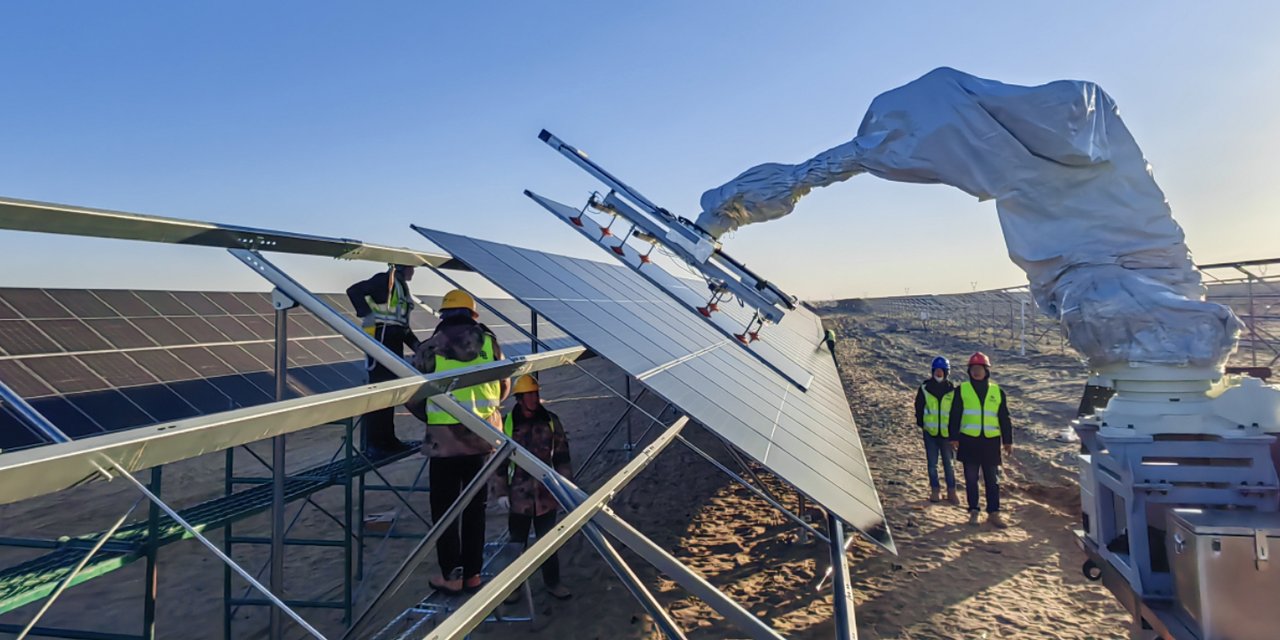
As utility-scale solar projects continue to grow in size, EPC contractors are facing increasing pressure to improve productivity while controlling construction costs.
At the same time, labor availability is becoming a challenge in many solar markets. Repetitive module installation requires a large workforce, while project schedules are becoming increasingly demanding.
These challenges are driving growing interest in solar installation robots and construction automation.
But for an EPC contractor, adopting a new robotic system is ultimately a business decision.
The key question is not simply:
"How much does a solar installation robot cost?"
The more important question is:
"Can the robot generate enough economic value to justify the investment?"
This is where ROI becomes critical.
A proper solar installation robot ROI analysis should look beyond the purchase price and evaluate labor costs, productivity, utilization, project duration, operating costs and the overall construction workflow.
What Does ROI Mean for a Solar Installation Robot?
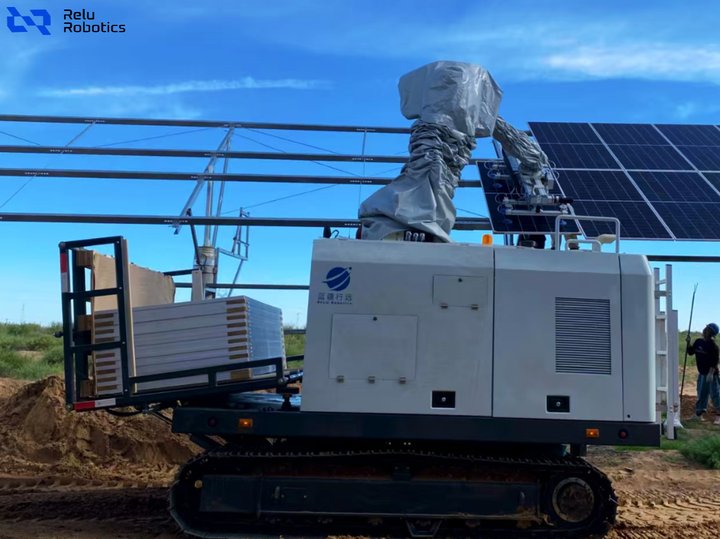
In simple terms, the ROI of a solar installation robot measures the economic return generated by automation compared with the investment required to deploy it.
A basic ROI assessment compares two scenarios:
Manual Installation
vs.
Robot-Assisted Installation
The objective is to understand how automation changes the overall economics of module installation.
Depending on the project, the economic benefits may come from:
- Lower direct labor costs
- Higher installation productivity
- Smaller or more efficient crews
- Reduced overtime
- Shorter installation schedules
- Better workforce utilization
- More consistent installation processes
- Reduced dependence on labor availability
For this reason, solar robot ROI should not be evaluated using a single metric.
It should be viewed as the combined economic impact of productivity, labor, utilization and project execution.
1. Labor Cost Is One of the Biggest ROI Drivers
Labor is often one of the most important variables in solar construction economics.
Traditional PV module installation can require multiple workers for lifting, positioning, handling and fastening modules.
The economic value of automation becomes more significant when projects face:
- High labor costs
- Labor shortages
- Difficulty recruiting skilled workers
- Remote project locations
- High accommodation and transportation costs
- Overtime requirements
- Tight construction schedules
A solar installation robot does not necessarily mean eliminating human workers.
In many real-world applications, the more practical approach is human-machine collaboration.
The robot performs repetitive and physically demanding tasks, while workers remain responsible for supervision, coordination, quality control, logistics and other construction activities.
The ROI therefore comes not only from reducing headcount, but from increasing the productivity of the entire installation team.
2. Productivity Directly Influences Project Economics
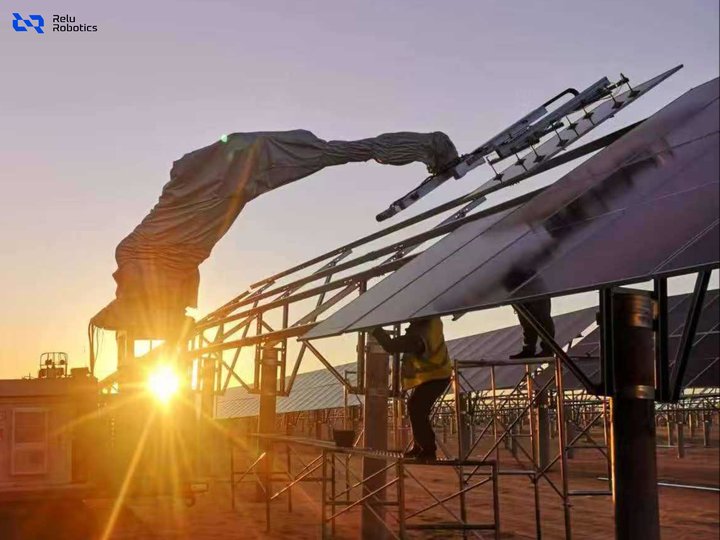
Productivity is another major factor in solar installation robot ROI.
The relevant question is not simply how fast a robot can move or operate.
Instead, EPC contractors should evaluate:
How many modules can the complete installation team place per working hour under actual project conditions?
This distinction is important.
A robotic system may have impressive technical capabilities, but the actual project productivity will depend on:
- Module specifications
- Installation configuration
- Terrain
- Row spacing
- Material supply
- Worker coordination
- Robot movement
- Setup time
- Weather
- Site logistics
- Operator experience
Therefore, ROI calculations should ideally use field-based productivity data rather than theoretical maximum performance.
3. Robot Utilization Is Critical
A robot only creates economic value when it is being used productively.
This makes utilization one of the most important factors in an automation business case.
For example, EPC contractors should consider:
- How many hours per day can the robot operate?
- How many days will it be deployed?
- How much time is required for relocation?
- How frequently does the workflow require setup or adjustment?
- How much downtime should be expected for maintenance?
- Can the robot be transferred efficiently between project areas?
- Can the same robot be deployed across multiple projects?
A highly utilized robot can potentially generate significantly more value over its operating life than a robot that is only used occasionally.
This is particularly relevant for EPC contractors with multiple utility-scale solar projects.
Instead of evaluating ROI based on a single project, they can evaluate the lifetime utilization of the robotic equipment across their project pipeline.
4. Project Schedule Can Be Part of the ROI
Labor savings are only one part of the economic equation.
For utility-scale solar projects, construction schedules can have a major impact on overall project economics.
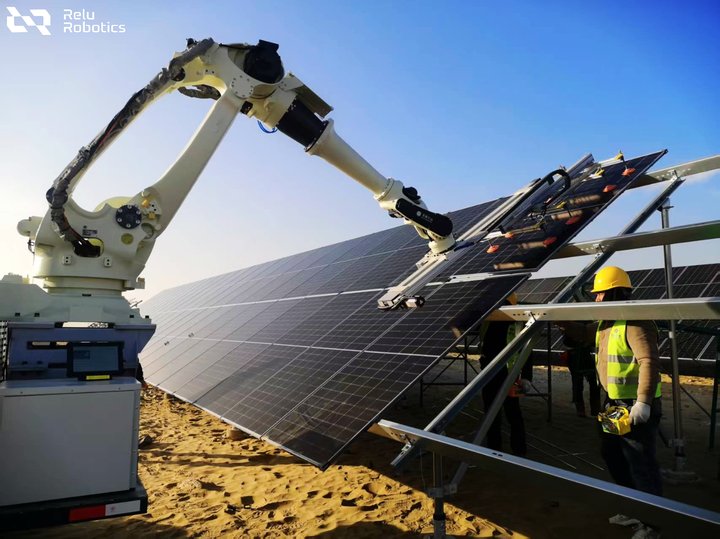
Higher installation productivity may allow an EPC contractor to:
- Complete module installation earlier
- Reduce pressure on downstream construction activities
- Improve workforce planning
- Reduce overtime requirements
- Improve schedule predictability
- Allocate workers to other construction activities
For projects with aggressive commissioning deadlines, the value of time can be particularly important.
In these situations, the business case for robotics should consider not only:
Cost per installed module
but also:
Time required to complete installation.
This is why a proper ROI assessment should combine cost efficiency and schedule efficiency.
5. Total Cost of Ownership Matters
A common mistake when evaluating robotics is to focus only on the initial purchase price.
The real business case should consider the Total Cost of Ownership (TCO).
Depending on the deployment model, TCO may include:
- Robot purchase or leasing cost
- Transportation
- Installation and commissioning
- Operator training
- Maintenance
- Spare parts
- Energy consumption
- Software or service costs
- Technical support
- Relocation between project sites
The relevant comparison is therefore not:
Robot price vs. labor cost
but:
Total cost of robot-assisted installation vs. total cost of manual installation.
This provides a much more realistic basis for an investment decision.
6. Cost per Installed Module Is a Useful KPI
One of the simplest ways to evaluate automation is to calculate the cost associated with installing each module.
A basic calculation can be expressed as:
Cost per Installed Module = Total Installation Cost ÷ Total Modules Installed
For a manual workflow, total installation cost may include:
- Direct labor
- Overtime
- Workforce-related expenses
- Relevant equipment costs
For a robotic workflow, the calculation may include:
- Labor
- Robot operating costs
- Maintenance
- Equipment depreciation or investment allocation
- Other deployment costs
Comparing these two figures can help EPC contractors understand whether automation improves the underlying economics of module installation.
7. Site Conditions Can Change the ROI
There is no universal ROI for a solar installation robot.
The same robotic system can produce very different economic results on different projects.
Important project variables include:
Terrain
Flat, sloped and uneven terrain may require different deployment strategies.
Site Accessibility
Transportation routes, ground conditions and project layout can affect equipment utilization.
Construction Workflow
The robot must be integrated into the existing material supply, installation and quality-control process.
For this reason, a project-specific assessment is much more valuable than applying a generic ROI percentage to every solar farm.
8. Human-Machine Collaboration Can Improve the Business Case
Automation does not necessarily mean removing people from the construction process.
In many cases, the strongest business case comes from combining robotic productivity with human decision-making.
A human-machine workflow can allow:
Robots to handle repetitive physical tasks such as module movement and placement.
Workers to manage supervision, material coordination, quality control and site operations.
This approach can help EPC contractors achieve higher productivity without completely redesigning their construction workforce.
It also makes it easier to introduce automation gradually.
Instead of attempting to automate an entire solar construction site at once, contractors can begin with one repetitive operation and expand automation as the workflow becomes more mature.
9. When Does a Solar Installation Robot Make Sense?
There is no single project size or labor rate that automatically determines whether robotics is worthwhile.
However, the business case tends to become stronger when several conditions exist simultaneously.
A solar installation robot may be particularly attractive when:
- The project contains a large number of modules
- Module installation is highly repetitive
- Labor availability is limited
- Labor costs are increasing
- Construction schedules are tight
- The robot can achieve high utilization
- The site is suitable for robotic operation
- The EPC contractor has multiple projects
For contractors with a strong project pipeline, the economic value of automation can extend beyond a single solar farm.
The robot becomes a reusable construction asset that can potentially be deployed across multiple projects.
From ROI to Long-Term Solar Construction Automation
The most important question is not whether a robot can replace a certain number of workers.
The bigger opportunity is whether automation can help EPC contractors build a more productive, predictable and scalable construction process.
As utility-scale solar projects continue to grow, construction teams will increasingly need to manage:
- Larger project volumes
- Labor constraints
- Tight schedules
- Higher productivity requirements
- Consistent installation quality
- Increasing construction complexity
Robotics, AI perception and human-machine collaboration can become important components of this next generation of solar construction.
The goal is not simply to automate one task.
It is to gradually build a more intelligent and efficient construction workflow.
Be the first to comment.