
Transforming Utility-Scale Solar Construction with AI-Empowered Robotics
The global solar industry is entering a new era of large-scale deployment.
As utility-scale solar farms continue to grow in size and complexity, EPC contractors and project developers are facing increasing challenges, including labor shortages, rising construction costs, tight project schedules, and the demand for higher installation quality.
Traditional solar module installation still relies heavily on manual labor, requiring workers to transport, lift, position, and install thousands or even millions of photovoltaic modules across large project sites. This process is physically demanding, time-consuming, and difficult to scale.
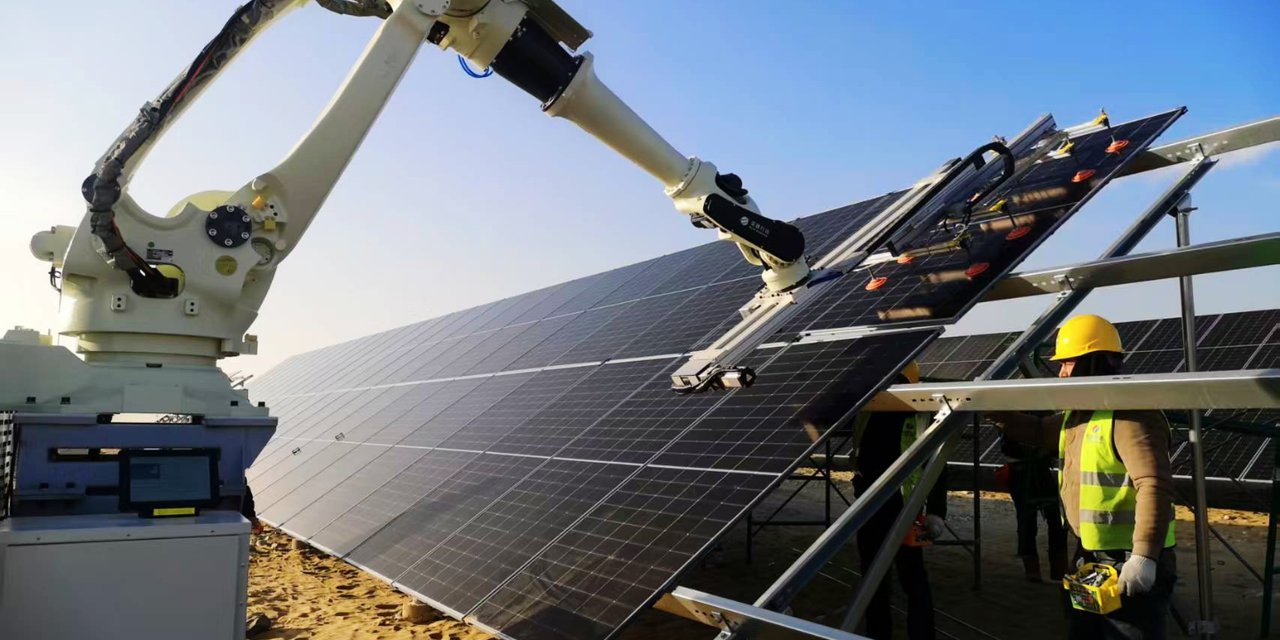
To address these challenges, Relu Robotics has developed the Bison Series Solar Installation Robot, an intelligent automation solution designed to improve efficiency, safety, and productivity in utility-scale solar construction.
The Challenges of Modern Utility-Scale Solar Construction
Large solar farms often cover hundreds or even thousands of acres, creating significant operational challenges during the construction phase.
- Labor-Intensive Installation Process
Solar panel installation requires extensive manual handling. Workers must repeatedly move heavy modules over uneven terrain, lift panels onto mounting structures, and maintain precise positioning throughout the installation process.
As solar projects become larger, relying only on manual labor can lead to:
- Lower installation speed
- Higher labor costs
- Increased worker fatigue
- Difficulty maintaining consistent quality
2. Increasing Pressure on Project Timelines
Solar developers are under growing pressure to complete projects faster and begin power generation sooner. Delays during construction can directly impact project returns and energy production schedules.
Improving installation efficiency has become a key factor in maintaining competitiveness.
3. Safety Risks in Large Solar Sites
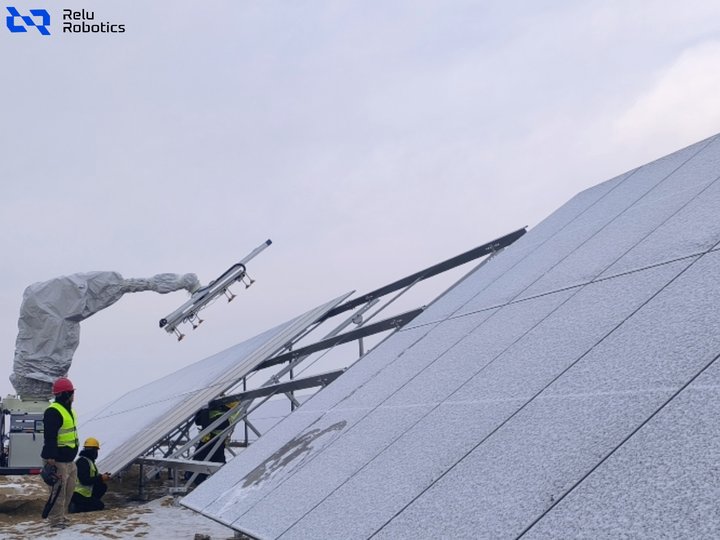
Utility-scale solar construction involves repetitive lifting, transportation, and installation tasks. Reducing heavy physical work not only improves productivity but also creates a safer working environment for construction teams.
Introducing Relu Robotics Bison Series Solar Installation Robot
The Relu Robotics Bison Series is designed specifically for utility-scale solar farm construction. By combining robotics, intelligent control systems, and advanced mechanical design, the Bison Series helps automate critical steps in photovoltaic module installation.
Instead of relying entirely on manual operations, solar construction teams can use robotic assistance to handle repetitive and labor-intensive tasks, enabling faster and more efficient PV deployment.
How Bison Series Improves Solar Farm Construction Efficiency
1. Faster Solar Module Installation
Speed is one of the biggest advantages of robotic solar installation.
The Bison Series helps construction teams accelerate module handling and placement, allowing more solar panels to be installed within the same project timeframe.
For large-scale solar farms, even small improvements in daily installation capacity can create significant gains throughout the entire construction cycle.
Higher installation efficiency means:
Shorter construction periods
Faster project completion
Earlier energy generation
Improved EPC project competitiveness
2. Reducing Dependence on Manual Labor
The shortage of skilled construction workers has become a global challenge for renewable energy projects.
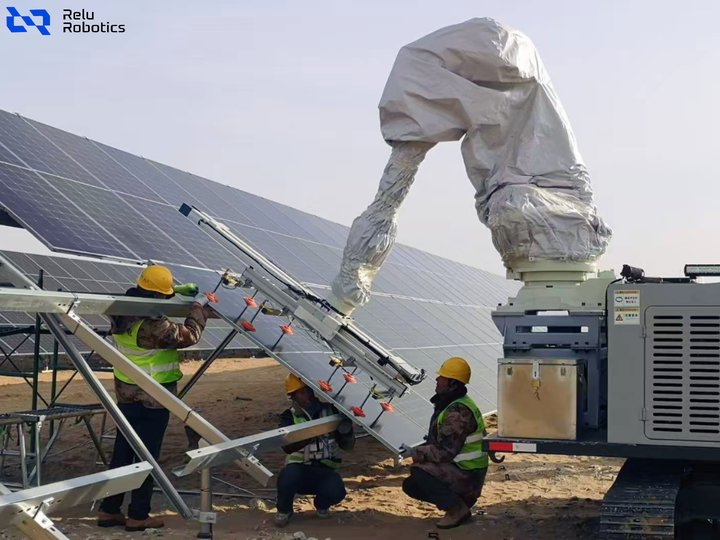
The Bison Series reduces the amount of repetitive manual work required on-site by assisting workers with solar panel transportation and installation operations.
Rather than replacing construction teams, the robot works as an intelligent assistant that allows workers to focus on supervision, quality control, and higher-value tasks.
3. Improving Installation Accuracy and Consistency
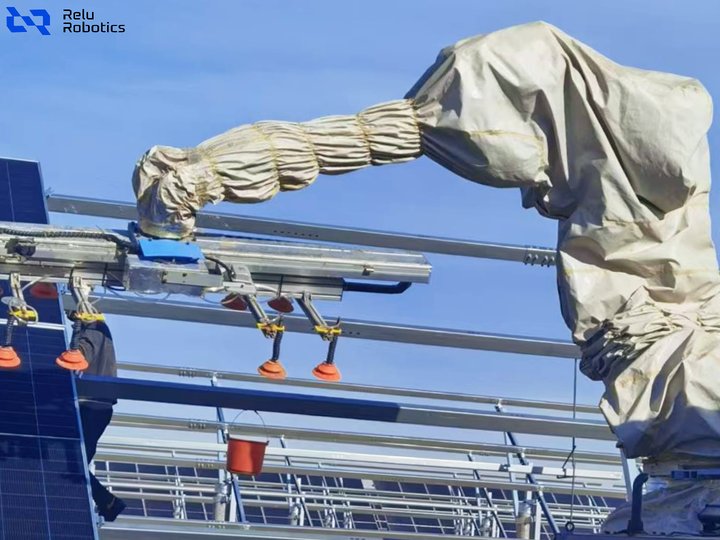
Large solar farms require thousands of modules to be installed with consistent alignment and positioning.
Human installation can be affected by fatigue, environmental conditions, and workload pressure. Robotic assistance helps maintain stable performance throughout long construction periods.
The Bison Series supports:
- Consistent module placement
- Reduced installation errors
- Improved construction quality
- Better project standardization
4. Enhancing Worker Safety
Solar farm construction environments can involve repetitive lifting and physically demanding operations.
By taking over some heavy handling tasks, the Bison Series helps reduce physical strain on workers and improves overall site safety.
A safer construction environment contributes to:
- Lower injury risks
- Better workforce efficiency
- More sustainable construction operations
5. Designed for Utility-Scale Solar Environments
Utility-scale solar projects require equipment that can operate reliably in challenging outdoor conditions.
The Bison Series is designed for large photovoltaic construction sites, supporting efficient operations across different project environments.
Its capabilities make it suitable for:
- Large solar farms
- Ground-mounted PV projects
- Solar EPC construction sites
- Renewable energy infrastructure projects
The Future of Solar Farm Construction: Automation and Intelligence
The future of solar energy is not only about producing more clean electricity , it is also about building solar infrastructure in smarter and more efficient ways.
As solar projects continue to expand worldwide, automation technologies will play an increasingly important role in improving construction efficiency.
Robotic solutions like the Relu Robotics Bison Series represent the next generation of solar construction technology, helping EPC companies and developers overcome labor challenges while accelerating the global transition to renewable energy.
Build Smarter Solar Farms with Relu Robotics
Relu Robotics is committed to developing intelligent robotic solutions that make solar construction faster, safer, and more efficient.
With the Bison Series Solar Installation Robot, utility-scale solar projects can achieve higher productivity while reducing construction challenges.
Be the first to comment.