
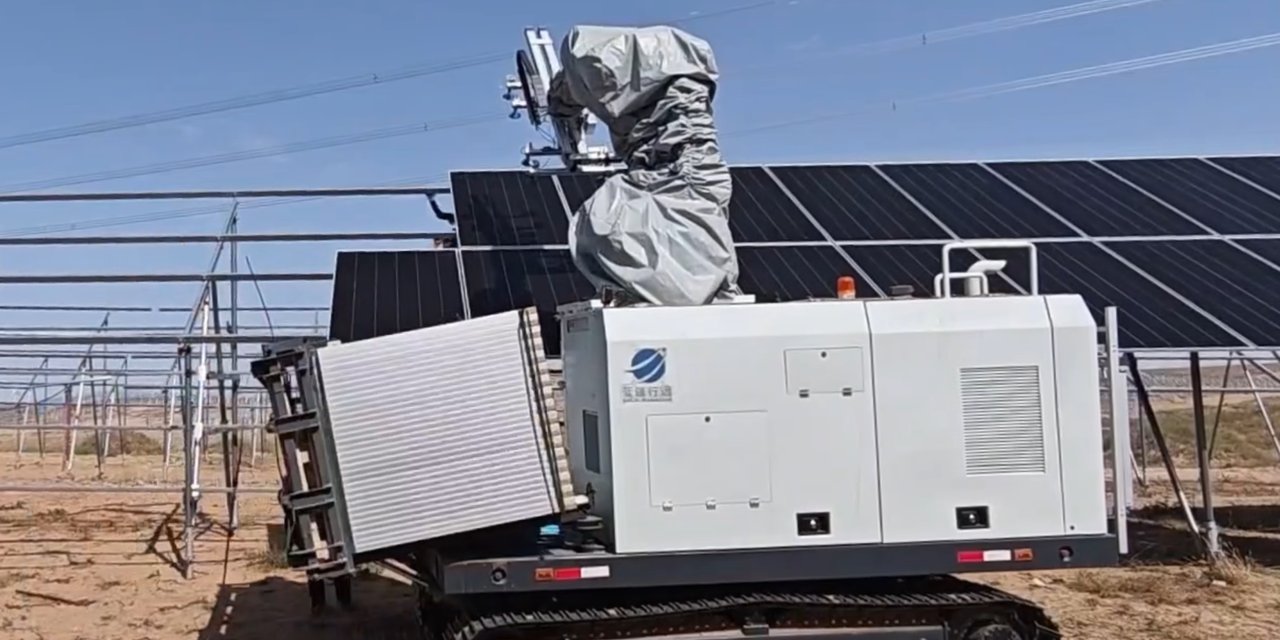
For EPC contractors, buying a solar panel installation robot is not simply about choosing a machine with a high installation speed. The key question is whether the robot can work reliably on real solar construction sites and deliver measurable value.
Before making a purchase, EPC contractors should consider these six factors.
1. Productivity
Installation speed directly affects project schedules and labor costs.
Look beyond the manufacturer's maximum speed. Ask about actual field productivity, including loading, positioning, placement, operator time, and site changes.
A robot that maintains stable productivity throughout a working day can be more valuable than one with a higher laboratory speed.
2. Terrain Adaptability
Utility-scale solar farms are rarely built on perfectly flat ground.
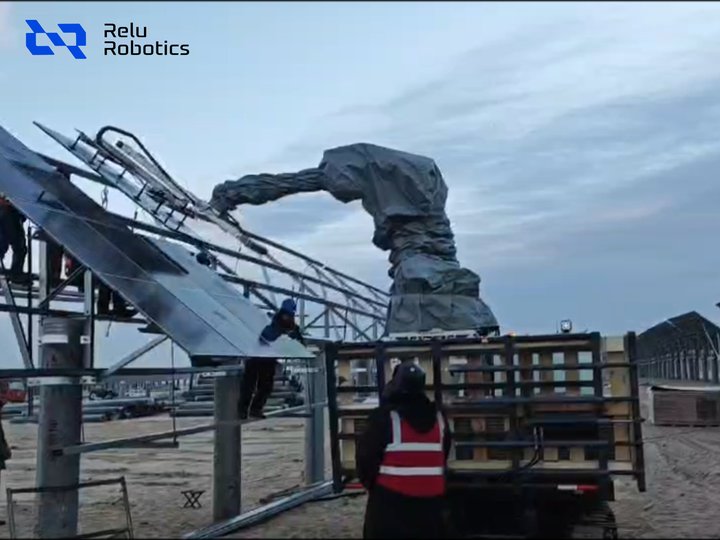
Desert, Gobi, slopes, uneven terrain, and changing ground conditions can affect robotic operation.
EPC contractors should evaluate the robot's mobility, ground clearance, operating slope, weather resistance, and ability to work on unstructured terrain.
3. Vision and Positioning Accuracy
A solar installation robot needs more than mechanical movement. It must understand where the module and mounting structure are in three-dimensional space.
A reliable system should provide 3D perception, positioning, alignment, and attitude adjustment to place modules accurately while adapting to real-world installation tolerances.
4.Human-Robot Collaboration
Automation does not necessarily mean removing people from the process.
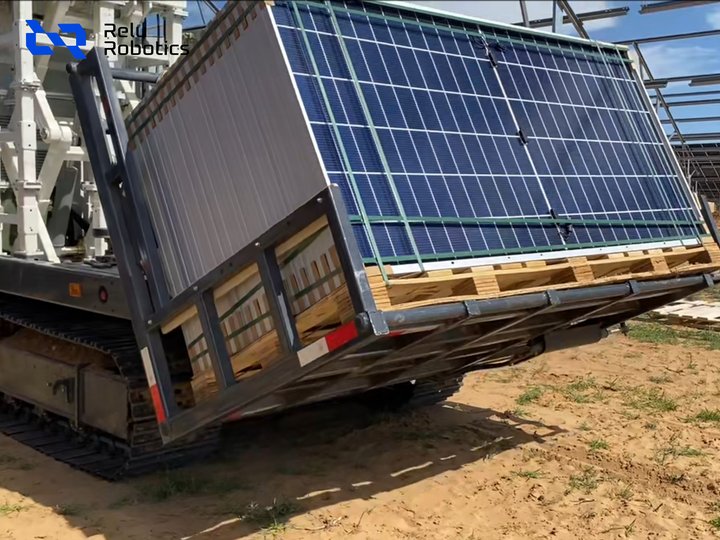
A practical solution should allow operators to define the working area, control movement when necessary, and handle temporary site conditions, while the robot performs repetitive tasks such as grasping, alignment, positioning, and placement.
The goal is to make the installation team more productive.
5. Safety and Site Integration
A robot must fit into the existing construction workflow.
Consider operator safety, emergency stops, obstacle detection, interaction with forklifts and other equipment, module handling, and integration with the site's logistics process.
The easier the robot is to integrate, the lower the disruption to ongoing construction.
6. ROI and Total Cost of Ownership
Finally, look beyond the purchase price.
Calculate the total cost of ownership, including equipment cost, transportation, operators, training, maintenance, spare parts, deployment time, and expected productivity.
The most important question is:
How much can the robot reduce installation cost and project time over its working life?
The Bottom Line
A solar panel installation robot should be evaluated as a construction solution, not simply as a piece of automation equipment.
For EPC contractors, the right evaluation should combine productivity, compatibility, terrain adaptability, accuracy, safety, human-machine collaboration, and ROI.
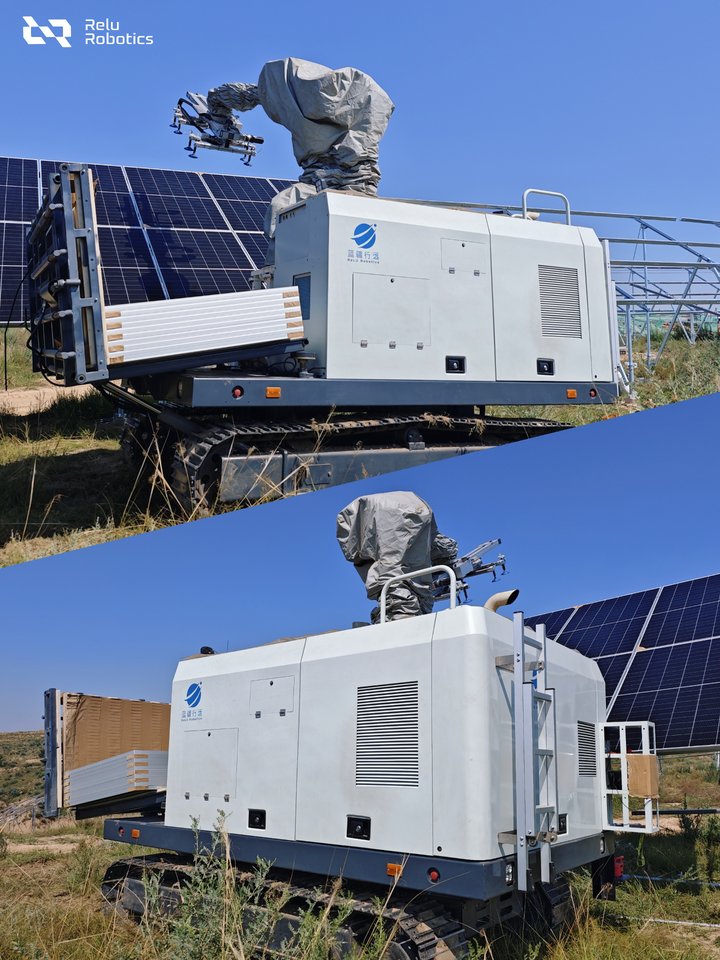
At RELU Robotics, the Bison Series is designed for utility-scale solar projects, combining robotic handling, 3D perception, and AI-based positioning to support PV module installation in challenging outdoor environments.
Before purchasing, the best next step is to evaluate the robot against your actual project parameters, module specifications, mounting structure, terrain, row layout, installation schedule, and labor costs.
Be the first to comment.